
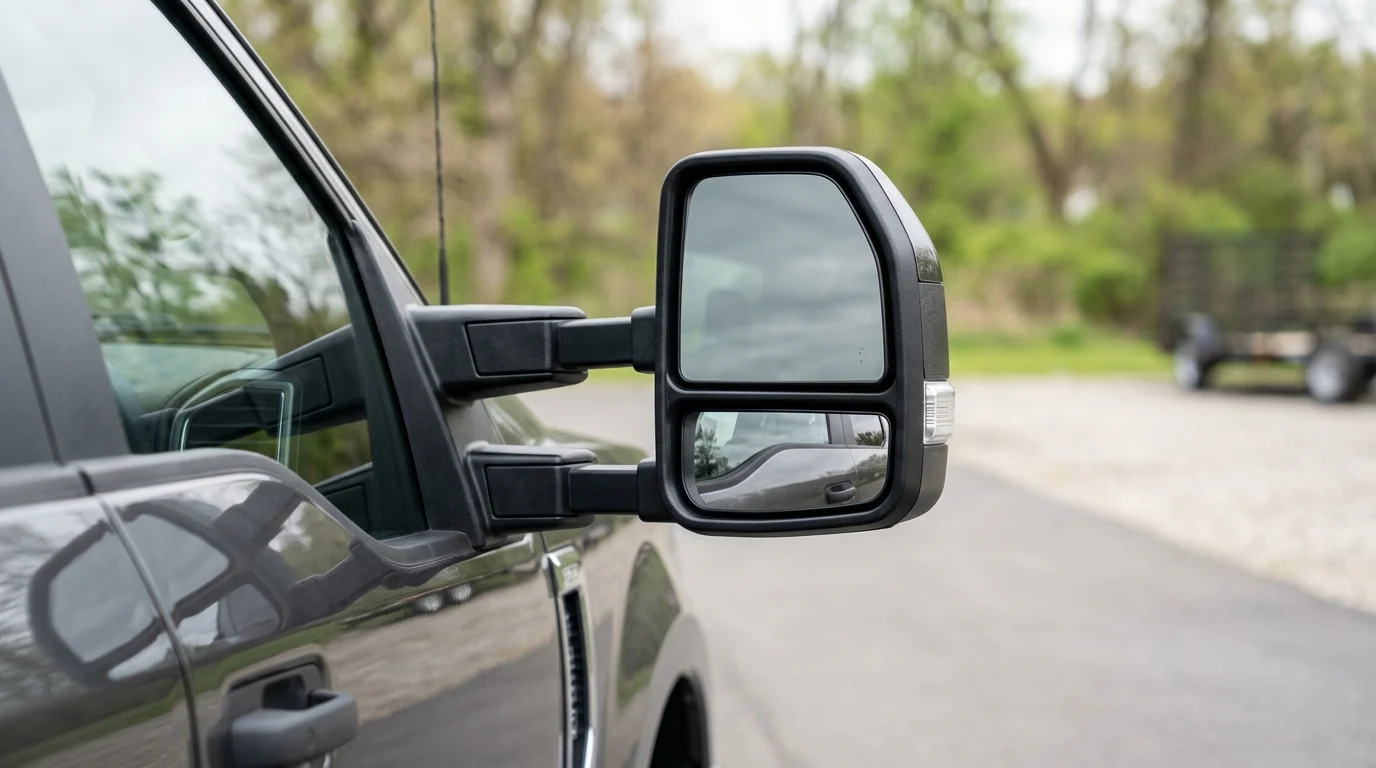
A towing mirror is more than a cosmetic upgrade—it directly affects lane-change confidence, trailer awareness, and long-distance driving safety. The 7255 series stands out because it blends Tacoma-style angular design with Chevy/GMC-focused body precision, giving truck owners a custom look without ignoring fitment fundamentals. For buyers comparing aftermarket and OEM-style options, the critical details include mirror extension, dual-glass visibility, mounting geometry, and wiring compatibility. This guide explains what to check before purchase, from 7-pin versus 12-pin harnesses to heated elements and power-fold limitations, so you can match style with the functional visibility your trailer setup actually requires.
Choosing a Cross-Model Towing Mirror
Selecting the ideal towing mirror requires balancing specialized aesthetics with rigorous structural compatibility. The “cross-model” concept here refers to a unique design choice: applying the rugged, angular styling of a Toyota Tacoma mirror to a housing engineered specifically for Chevy and GMC trucks. Drivers must ensure that this specialized mirror housing provides adequate outward extension to minimize dangerous blind spots. Extension requirements are driven primarily by trailer width, rather than payload weight or trailer length, making proper outward reach essential for safe hauling.
Fitment, Mounting, and Wiring Checks
Integrating this custom housing onto Chevy or GMC doors demands precise alignment with factory mounting points. The mirror base and adapter hardware must match the door contour to prevent water entry and wind noise at highway speeds. Electronic compatibility is equally paramount.
Compatibility & Wiring Note: Adapter requirements, pin counts, and fuse needs vary significantly by specific model year and trim level. Owners must confirm whether the truck utilizes a standard 7-pin or a more complex 12-pin wiring harness. It is crucial to separate lighting circuits (such as integrated turn signals and puddle lights) from mechanical and power circuits (like power-fold, memory settings, and motorized glass adjustment) when reviewing supplier specs. Upgrading to heated elements may require a specialized inline fuse, and buyers should verify if aftermarket installation results in the loss of OEM features like power-folding.
OEM-Style vs Aftermarket Mirror Options
While factory-issued towing mirrors guarantee structural fitment, they often lack the distinct visual character that off-road and towing enthusiasts desire. Specialized aftermarket options bridge this gap by offering customized housing designs alongside OEM-grade internal components.
| Mirror Category | Average Cost Band | Extension Range | Blind Spot Reduction | Aesthetic Profile |
|---|---|---|---|---|
| Factory Standard | Baseline | 0 inches | Baseline | Standard OEM |
| Factory Towing | Premium | 3 to 4 inches | Moderate | Bulky/Utilitarian |
| Hybrid Aftermarket (e.g., 7255 series) | Varies by supplier | Varies by supplier specs | High (Dual-Glass) | Custom (Tacoma-style) |
Opting for a hybrid aftermarket solution allows owners to achieve an aggressive styling profile while maintaining the robust structural integrity required for full-size heavy-duty hauling. This approach ensures drivers do not have to compromise on safety metrics to achieve a personalized exterior look. Owners should compare the custom footprint to standard GM tow mirrors to ensure the overall size meets their specific towing needs.
7255 Towing Mirror Design and Performance

The aftermarket 7255 series towing mirror merges custom outer styling with the precise mounting geometry required for Chevy Silverado and GMC Sierra trucks. Because fitment can vary, buyers must verify the exact manufacturer brand and supported model-year ranges (e.g., specific 1500, 2500, or 3500 series models across the GMT800 or GMT900 platforms) before purchase. By utilizing a dual-glass architecture, this mirror assembly expands rear visibility compared to standard factory mirrors. It uses a lower convex lens to monitor lower blind spots and trailer wheels during tight maneuvers. Drivers should explicitly note that convex mirrors inherently distort distance perception, making objects appear further away than they are; this requires a dedicated adaptation period for safe lane changes. Any aftermarket upgrade should also be verified for FMVSS 111 compliance.
Tacoma-Inspired Styling and Key Features
The exterior housing of the 7255 model appeals to drivers who prefer a rugged, off-road-ready appearance. The casing is typically constructed from high-impact plastics, such as injection-molded ABS, engineered to withstand substantial external impacts and resist UV degradation. (Drivers looking to color-match should verify with the supplier if the textured housing is paintable). Key features often include integrated LED turn signals that enhance lateral visibility, and a manual dual-arm telescopic extension mechanism that glides smoothly while resisting dirt and water entry. While the outward telescoping is manual, the internal motorized adjustment components for the glass are sealed against dust and moisture, allowing drivers to fine-tune viewing angles effortlessly in harsh weather conditions.
Fit Precision, Stability, and Rear Visibility
The structural foundation of the 7255 mirror is meticulously calibrated for specific Chevy and GMC door panels. The mounting bracket typically utilizes durable materials like aluminum to provide exceptional rigidity, mitigating the high-frequency vibrations that often plague aftermarket extensions at highway speeds. This fit precision guarantees steady operation and clear rear visibility. The heavy-duty internal springs within the folding mechanism also offer a breakaway feature, absorbing minor impacts to help prevent severe damage to the entire mirror assembly if accidentally clipped by a passing vehicle. Owners should consult their vehicle’s warranty guidelines, as installing aftermarket electrical and structural components can sometimes carry warranty implications.
Installation and Practical Value
Proper installation is the defining factor in the longevity and performance of any heavy-duty automotive accessory. Securing a component like the 7255 towing mirror requires strict adherence to mechanical specifications. To prevent stress fractures in the vehicle’s door skin and ensure a watertight seal, mounting bolts must be tightened to the manufacturer’s specified torque settings. Utilizing a calibrated torque wrench ensures uniform compression on the weather stripping, significantly reducing the risk of water entry during high-pressure car washes or severe rainstorms.
Vehicle Generation, Mounting Points, and Torque
Before beginning the installation process, owners must verify their specific truck generation (such as the GMT800 or GMT900 platforms) and exact model year to confirm fitment, as mounting points and wiring harnesses vary significantly between early 2000s models and later generations. Owners should follow the manufacturer’s included installation sheet to secure the mirror firmly against the door frame. Applying the proper torque to all mounting bolts—explicitly following the torque range provided in the instructions—is critical, as excessive road vibration can slowly loosen improperly secured fasteners over long-distance driving. Consequently, it is highly recommended to regularly inspect bracket tightness, particularly after traversing off-road trails or exceptionally bumpy road conditions.
Daily Driving and Towing Benefits
Beyond the immediate aesthetic upgrade, the practical benefits of the mirror assembly
Key Takeaways
- Verify the exact Chevy or GMC model year, trim, and series before ordering a 7255 towing mirror.
- Choose mirror extension based on trailer width because width has the greatest impact on towing blind spots.
- Check whether your truck uses a 7-pin or 12-pin wiring harness before expecting lighting, heating, or power features to work.
- Compare the 7255 mirror footprint with standard GM tow mirrors to confirm it delivers enough rear visibility for your trailer.
- Inspect mounting alignment and door contour compatibility to reduce the risk of wind noise, vibration, and water intrusion.
Frequently Asked Questions
What makes the 7255 towing mirror different from a standard Chevy/GMC mirror?
The 7255 series combines Tacoma-inspired exterior styling with a mirror body designed for Chevy/GMC fitment, offering a custom look while supporting towing-focused visibility.
Does trailer length determine how far a towing mirror should extend?
Not primarily. Trailer width is the key factor because wider trailers create larger blind spots that require more outward mirror reach.
What should I check before buying a 7255 towing mirror?
Confirm your truck’s model year, trim, mounting points, door contour, wiring harness type, and supported features such as heat, turn signals, puddle lights, or power-folding.
Will all OEM mirror functions work after installation?
Not always. Aftermarket mirrors may not retain every OEM feature, especially power-fold, memory, or heated functions unless the wiring and components are compatible.
Why are 7-pin and 12-pin harnesses important?
They determine which mirror functions can connect properly. Lighting, heating, motor adjustment, and power-fold circuits may require different pins or adapters.