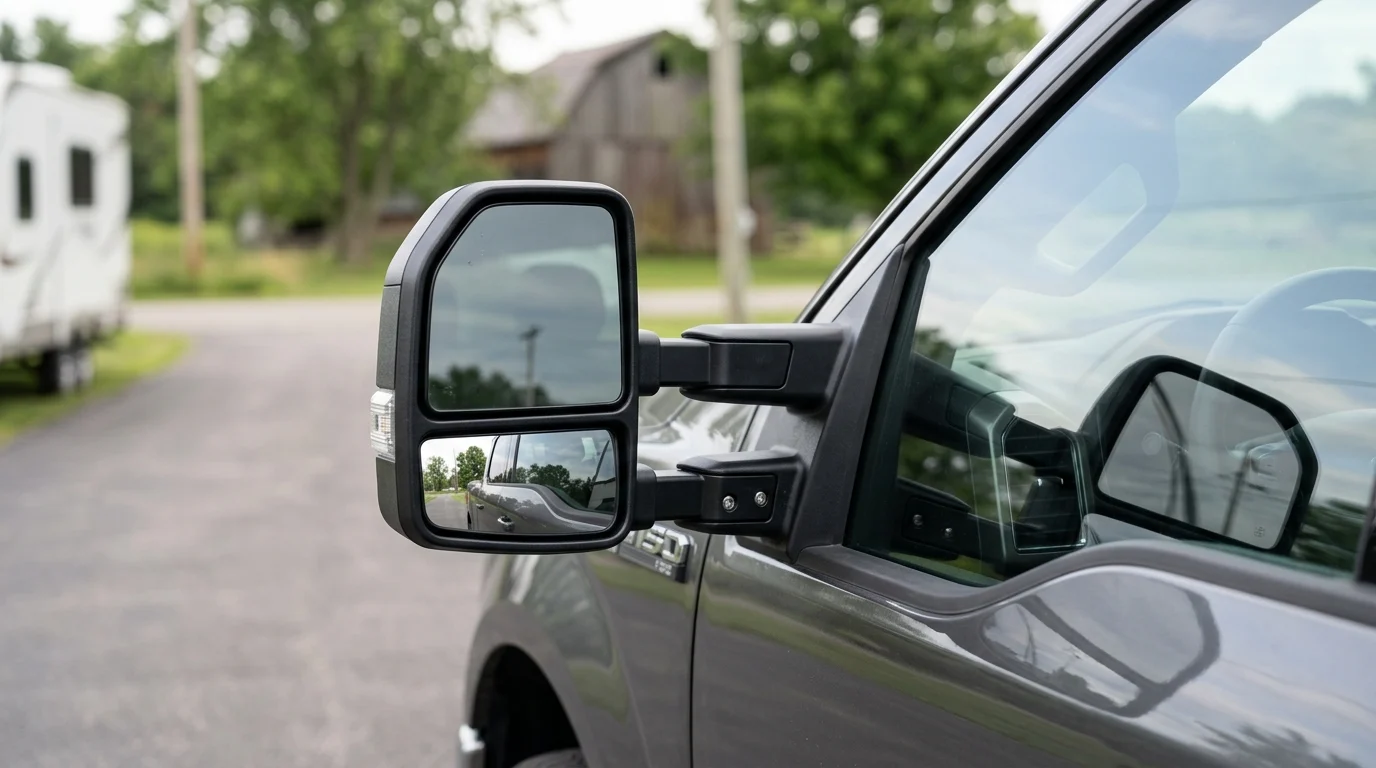
A clean GMT400 restoration should not force you to choose between period-correct styling and safer towing. For 1988–1998 Chevy and GMC C/K pickups and Suburbans, the original side mirrors were never designed around today’s wider enclosed trailers, campers, and heavy-haul expectations. Decades of UV exposure, road salt, and mechanical wear can also leave factory mirror pivots loose, creating vibration just when you need a clear rear view most. This guide explains what to look for in an OEM-style chrome towing mirror, including fitment, visibility, wiring, convex glass, corrosion resistance, and width considerations, so your classic truck can look right while working harder.
Why Upgrade 1988–1998 Chevy and GMC C/K Mirrors
Restoring a 1988–1998 Chevy or GMC C/K Pickup or Suburban often reveals that factory exterior components struggle with today’s rigorous towing demands. Drivers attempting to haul modern wide enclosed trailers or heavy fifth-wheel campers quickly discover a major vulnerability. Original equipment mirrors fall dangerously short in both visibility and structural integrity against modern standards, turning highway towing into a stressful and hazardous endeavor.
Common Limits of Original Pickup and Suburban Mirrors
Factory mirrors on these classic trucks suffer from an increasingly unstable structure after long-term use. Decades of exposure to UV radiation, road salt, and mechanical stress have severely degraded the internal springs and pivots within the original mirror housings.
This mechanical fatigue results in excessive vibration at highway speeds, rendering the rear view blurry. Furthermore, the standard factory glass provides insufficient lateral extension for modern applications. This lack of reach leaves massive blind spots along the sides of today’s wider trailers, making lane changes and backing maneuvers with a heavy payload hazardous.
What OEM-Looking Chrome Towing Mirrors Should Offer
Upgrading these critical components requires a balance between modern safety performance and factory styling compatibility. An ideal OEM-looking chrome towing mirror should retain the classic aesthetic of late 1980s and 1990s luxury trims—like the Silverado and Sierra—while delivering heavy-duty functionality.
High-quality chrome housings must offer reliable weather resistance, typically engineered to pass OEM-grade salt spray testing for verifiable corrosion protection. By integrating precise convex curvature and rigid internal mounting bases wrapped in a classic finish, truck restorers can achieve contemporary towing safety and compliance without compromising their vehicle’s original appeal.
How the 7255C-88-EAS Chrome Towing Mirror Fits and Performs
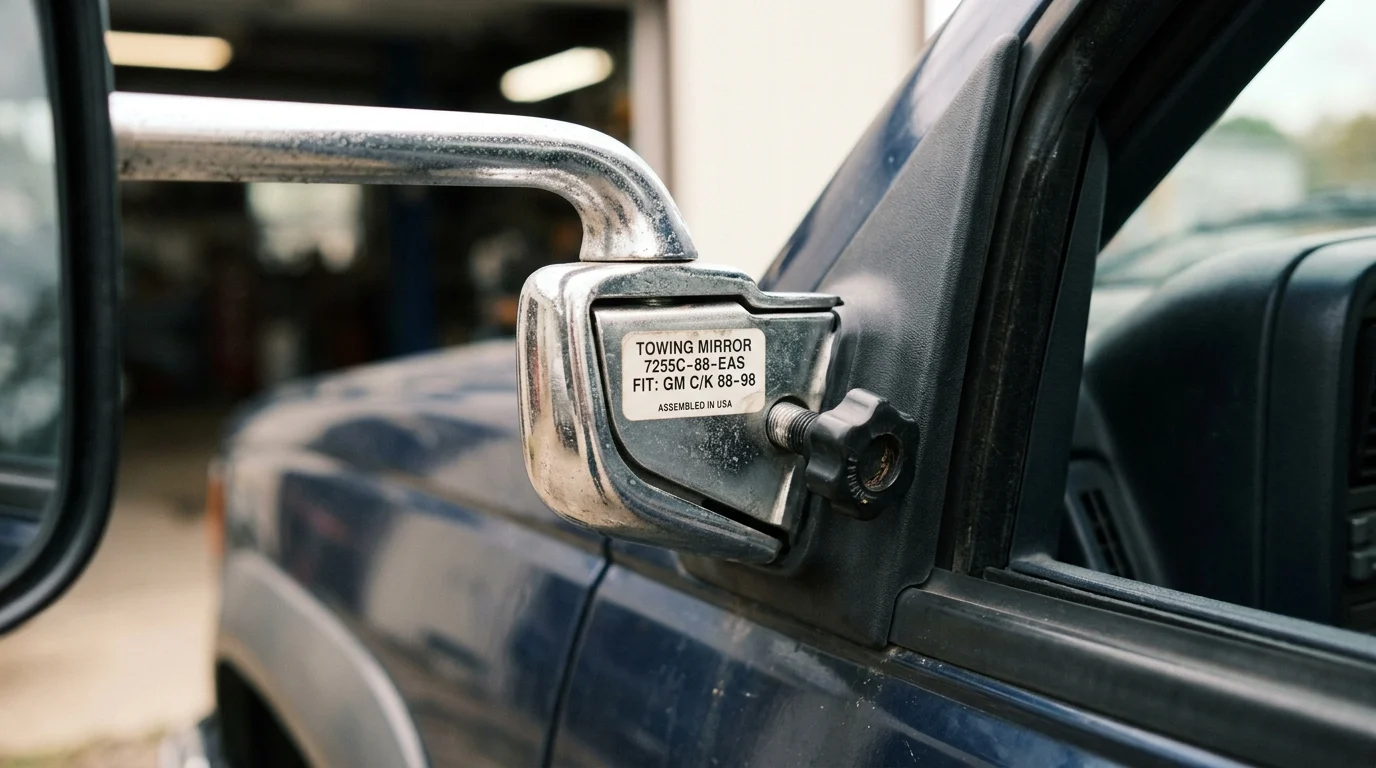
The “7255C-88-EAS” identifier represents a common aftermarket style number rather than a singular proprietary product, but it serves as an excellent benchmark for what to look for in a towing mirror upgrade. This representative design solves the historical limitations of aging GMT400 factory mirrors by combining period-correct styling with updated internal architecture, improving rear visibility for heavy-duty towing operations.
Key Features and Fitment Details
Engineered for the 1988–1998 Chevy and GMC C/K Pickup and Suburban, mirrors in this style integrate directly with classic vehicle bodies. Before purchasing, buyers must verify electrical compatibility across the 11-year GMT400 run. Trucks upgrading from manual to power or heated mirrors will require custom wiring and aftermarket adapter harnesses, especially if the original door shells lack factory mirror wiring.
Drivers must also note practical dimensional and regulatory caveats. These towing mirrors typically add several inches of width to each side of the truck. Buyers should confirm whether the arms are telescoping or fixed, and if the mirror heads manually fold to accommodate narrow garages. Additionally, check local DOT and state regulations regarding maximum vehicle width and extended mirrors on public roads.
Unlike original flat-glass units, these towing mirrors utilize a combination of convex and flat glass. The lower convex section expands the outward viewing angle to eliminate blind spots. However, objects in convex mirrors appear smaller and farther away than they actually are, making careful distance judgment essential.
The following comparison highlights the primary advantages of upgrading to this heavy-duty design:
| Feature | Original Factory Mirror | 7255C-88-EAS Towing Mirror |
|---|---|---|
| Core Structure | 1990s Single-Pivot | Modern Dual-Arm Architecture |
| Housing Material | Standard Plastic/Chrome | Premium Corrosion-Resistant Chrome |
| Visibility Coverage for Trailer Widths | Standard Widths | Wide Enclosed Trailers |
| Vibration Control | Low (Prone to fatigue) | High (Reinforced mounting base) |
| Lateral Extension | Standard factory reach | Extended heavy-duty reach |
How It Compares With Newer Chevy Mirror Designs
While the 7255C-88-EAS style retains a vintage chrome aesthetic, its architecture borrows heavily from the towing mirrors found on newer generations of Chevy Silverado and GMC Sierra HD trucks. Modern OEM Chevy mirrors utilize a dual-arm, telescoping structure to provide a wider field of view for 102-inch-wide trailers. By adapting this newer dual-arm geometry to the older 1988–1998 chassis, aftermarket manufacturers bridge the gap between classic truck styling and modern heavy-duty visibility standards.
Unlike the integrated turn signals, puddle lights, and power-folding features standard on late-model Chevy mirrors, these retrofitted units focus strictly on structural rigidity and extended reach. This provides the necessary physical extension to monitor wide trailers without requiring complex electrical modifications for features the GMT400 platform never originally supported. Note that while visibility matches newer trucks, installing these mirrors does not increase the classic truck’s factory towing capacity.
Installation, Maintenance, and Safe Use
Achieving maximum performance from a towing mirror upgrade requires proper installation and ongoing maintenance. Because these units are engineered for dimensional fitment on the GMT400 platform, the physical installation process is straightforward, though strict attention to hardware torque and surface care is essential.
Model Matching for Smooth Installation
Complete model matching allows these mirrors to bolt directly onto the factory 3-stud mounting points of the C/K door frame. This generally eliminates the need for drilling or custom fabrication, preserving the classic doors. However, the increased weight and leverage of an extended towing mirror can stress 30-plus-year-old door sheet metal and hinges. Installers should carefully verify door alignment and consider adding backing plates or mounting reinforcement if the original metal shows signs of fatigue.
To prevent loosening during heavy towing, installers must torque the mounting nuts to the manufacturer’s recommended specifications. It is highly recommended to regularly check mounting tightness after the first 500 miles of towing, as road vibrations and temperature fluctuations can cause the initial settling of the weather stripping and hardware.
Care Tips for Long-Term Visibility and Safety
Preserving the chrome finish requires basic but consistent detailing. Owners should clean the mirror lens and chrome surface gently using a microfiber cloth and a pH-neutral automotive soap to avoid micro-scratches. Harsh chemical degreasers must be avoided, as they can degrade the chrome plating over time.
Applying a non-abrasive chrome sealant or synthetic wax
Key Takeaways
- Replace worn 1988–1998 C/K factory mirrors if vibration, weak pivots, or limited side visibility make towing harder or less safe.
- Choose an OEM-looking chrome towing mirror that preserves the classic Silverado or Sierra appearance while adding wider trailer visibility.
- Verify electrical compatibility before buying, especially if upgrading from manual mirrors to power-adjustable or heated mirror functions.
- Check whether the mirror arms are fixed, telescoping, or folding so the added width works with garages, parking spaces, and towing needs.
- Use mirrors with flat and convex glass sections to improve rearward detail and reduce blind spots along wider modern trailers.
- Confirm local DOT or state requirements for extended mirror width before driving with towing mirrors on public roads.
Frequently Asked Questions
Will this towing mirror fit all 1988–1998 Chevy and GMC C/K pickups and Suburbans?
It is designed for 1988–1998 Chevy/GMC C/K Pickup and Suburban models, but buyers should confirm door mounting points, wiring, and original mirror options before ordering.
Why replace the original GMT400 factory mirrors?
Aged factory mirrors often vibrate, have weakened pivots, and lack enough outward reach for modern wide trailers, increasing blind spots during towing, lane changes, and backing.
Does the chrome towing mirror keep an OEM-style appearance?
Yes. The chrome housing is intended to match the period-correct look of Silverado, Sierra, and other classic trim styles while adding modern towing visibility.
Do I need extra wiring for power or heated mirror functions?
Possibly. Trucks originally equipped with manual mirrors may need custom wiring or adapter harnesses to support power adjustment or heated glass features.
How does convex glass improve towing safety?
The convex lower section widens the field of view, helping reduce blind spots along the trailer sides that flat factory glass may not cover.