
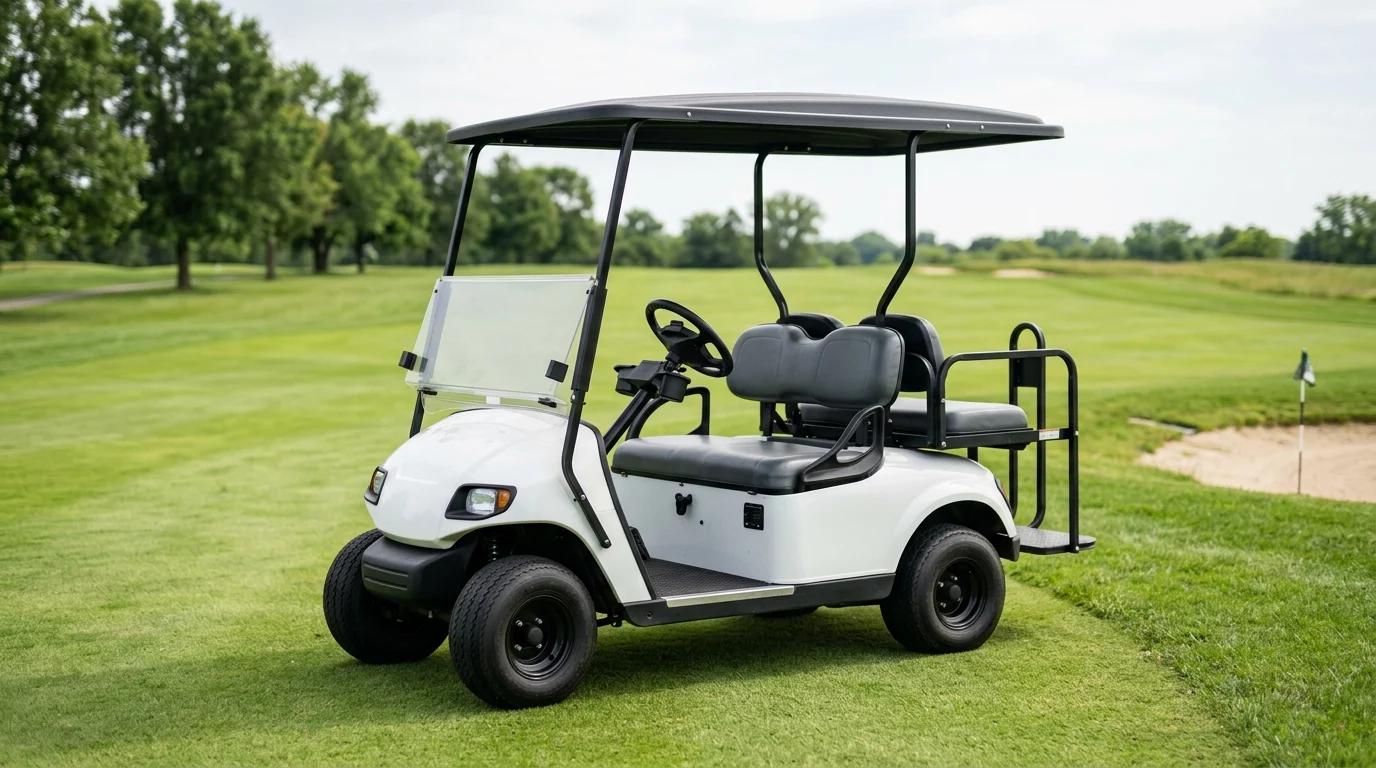
Why Choose a 2-Seater Electric Utility Golf Cart
The demand for versatile, low-speed mobility has transformed the traditional recreational golf cart into the robust Utility Electric Vehicle (UEV). Facility managers, event coordinators, and fleet operators are increasingly adopting commercial-grade 2-seater electric carts to balance agile maneuverability with heavy-duty performance. Rather than spending a fortune on full-sized trucks or combustion-engine maintenance equipment, organizations leverage these compact, battery-powered units to streamline site transport and daily logistical tasks.
How Utility Electric Vehicles Differ from Standard Golf Carts
Standard golf carts are primarily designed for smooth, manicured fairways and carrying lightweight payloads. In contrast, UEVs are engineered for multi-use environments and demanding daily duty cycles. Classified as Low-Speed Vehicles (LSVs), modern utility carts often feature reinforced chassis, upgraded independent suspensions, and higher payload capacities to handle varying terrain and equipment transport. While a basic recreational cart might max out at 15 mph, a commercial-grade UEV typically reaches top speeds between 15 and 25 mph.
Furthermore, buyers must distinguish between baseline commercial utility specs for private job-site use and optional street-legal packages. Standard carts usually lack the safety homologation required for street use. To legally operate on public roads with speed limits under 35 mph in the United States, a UEV must be upgraded to meet specific compliance standards. This optional DOT/LSV package requires factory-installed, Department of Transportation (DOT)-approved seat belts, turn signals, side and rearview mirrorss](https://www.findcarmirror.com/universal/), headlights, and a registered Vehicle Identification Number (VIN) for licensing.
Best Uses for a 2-Seater Utility Golf Cart
The 2-seater configuration offers distinct advantages in spatial efficiency and energy conservation. By eliminating rear seating and extending the cargo area, the vehicle maintains a lighter gross weight, directly translating to an extended range per charge. The narrower profile and shorter wheelbase allow these carts to navigate tight pathways, making them highly effective for solo staff members or two-person maintenance crews working in crowded environments.
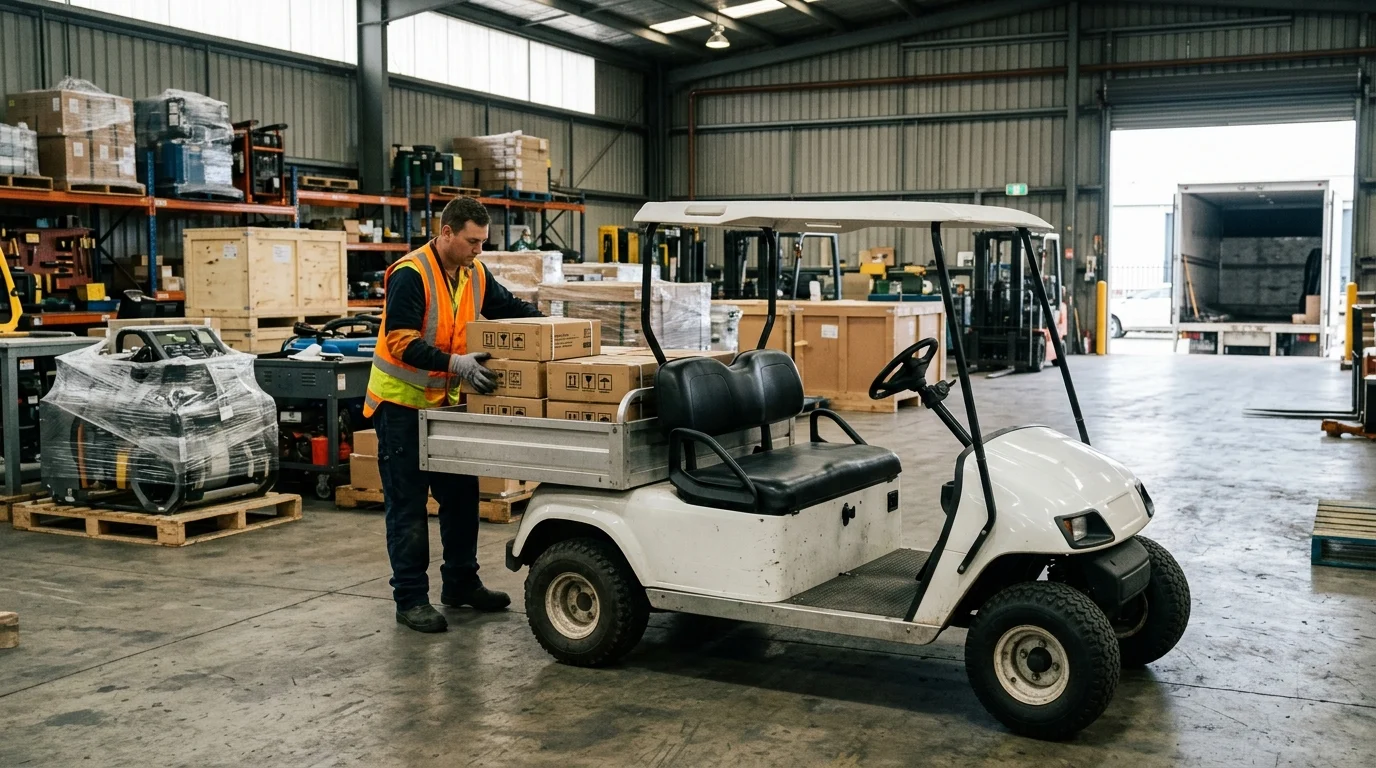
Common applications for these compact vehicles span far beyond the golf course. Resorts utilize them for rapid housekeeping and staff transport, industrial parks deploy them for indoor warehouse logistics, and university campuses rely on them for security patrols and grounds maintenance. In these settings, a compact 2-seater easily maneuvers through pedestrian-heavy zones where larger utility vehicles would pose a safety risk or logistical hazard.
Key Performance Features to Compare
When evaluating a commercial-grade electric cart, the underlying powertrain and drivetrain technologies dictate both its daily capabilities and long-term reliability. Upgrading to advanced electrical architectures and intuitive transmission systems transforms a basic cart into a high-performance utility asset suitable for demanding job sites and hilly terrains.
72V Lithium vs. 48V Power Systems
The shift from traditional 48V systems to 72V lithium-ion architectures marks a significant leap in UEV performance. A 72V system draws less current to produce the same amount of power, which significantly reduces thermal stress on the battery, cables, and motor controller. This higher voltage architecture delivers superior hill-climbing torque and faster, smoother acceleration even under maximum payload.
Coupled with lithium technology, these electrical benefits multiply. Lithium batteries offer three times the energy density of traditional lead-acid units, drastically reducing the vehicle’s overall weight while extending its range. They also eliminate the cumbersome watering routines associated with older battery chemistries, requiring only minimal maintenance like periodic Battery Management System (BMS) and terminal checks.
| Feature | 48V Lead-Acid System | 72V Lithium System |
|---|---|---|
| Charge Time | 8-12 hours | 3-5 hours |
| Lifespan | 3-5 years | 8-10 years (2000+ cycles) |
| Maintenance | Regular watering required | Minimal (e.g., BMS checks) |
| Hill Torque | Moderate | High/Excellent |
How Semi-Automatic Driving Reduces Training Time
Fleet managers often face logistical challenges when onboarding new staff to operate site vehicles. Modern electric drivetrains mitigate this friction by drastically simplifying the control interface. Operating with a simple forward/reverse selector and pedal-assist logic, the vehicle provides seamless power without the need for complex shifting.
This simplified “press and go” functionality ensures drivers of all skill levels can safely operate the UEV with minimal instruction. For commercial fleets involving multiple shift workers, this reduction in training time translates to measurable operational efficiency. Furthermore, the intuitive electronic control system prevents the mechanical wear and tear typically associated with inexperienced drivers operating older gas-powered equipment, while simultaneously reducing driver fatigue during long shifts.
How to Evaluate Total Cost and Value
Procurement decisions for utility vehicles must extend beyond the initial sticker price to encompass the Total Cost of Ownership (TCO). Electric UEVs are inherently more economical to operate than their internal combustion counterparts, typically running 70% to 80% cheaper over their lifespan. With charging costs often averaging just $0.50 to $1.00 per cycle—depending on local electricity rates, battery capacity, and depth of discharge—and no requirements for oil changes or engine tune-ups, the financial argument for electrification is highly compelling.
Important Specs and Accessories to Review
To accurately assess a cart’s value, buyers must scrutinize core specifications alongside modular add-ons. Key technical metrics include the battery capacity (measured in Ampere-hours, or Ah), continuous AC motor power output (typically ranging from 4kW to 5kW for commercial models), and the maximum range per charge. A commercial cart must provide sufficient battery capacity to complete a full day’s work without necessitating mid-shift downtime for recharging.
Beyond the powertrain, modular accessories dictate the vehicle’s daily versatility. If the cart will split time between turf maintenance and player transport, golf-specific accessories like 2-to-4 bag holders, scorecard mounts, ball washers, and sand bottles are essential. Conversely, industrial and municipal users should prioritize heavy-duty utility upgrades such as reinforced cargo beds, structural roof racks, custom branded enclosures, and all-weather rain covers to protect tools and personnel.
When a Lower-Priced 72V Lithium Cart Delivers Better Value
The pricing landscape for electric utility vehicles varies significantly based on brand recognition and battery chemistry. Premium, legacy brand-name units often command retail prices between $8,000 and $15,000 USD.
Key Takeaways
- Choose a 2-seater utility electric vehicle when you need compact staff transport plus cargo space without the operating cost of a full-size truck.
- A 72V lithium power system is a practical upgrade for better hill-climbing torque, smoother acceleration, and lower electrical stress than many 48V setups.
- Verify payload capacity, suspension quality, braking performance, and cargo configuration before buying a cheap electric golf cart for commercial duty.
- Do not assume a utility golf cart is street legal; confirm whether it includes a DOT/LSV package with mirrors, lights, turn signals, seat belts, and VIN registration.
- Use a compact 2-seater UEV for campuses, resorts, warehouses, golf courses, and job sites where maneuverability and low-speed safety matter.
Frequently Asked Questions
What makes a 2-seater electric utility golf cart different from a standard golf cart?
A utility electric vehicle is built for daily work, not just fairways. It typically adds a reinforced chassis, upgraded suspension, cargo space, and higher payload capability for maintenance, campuses, resorts, warehouses, and job sites.
Why choose a 72V lithium battery system over a 48V setup?
A 72V lithium system can deliver stronger torque, smoother acceleration, and reduced electrical stress compared with many 48V systems, especially when carrying tools, supplies, or climbing hills.
Is this type of cheap golf cart suitable for commercial use?
Yes, a commercial-grade 2-seater UEV is designed for repeated daily tasks such as staff transport, grounds maintenance, housekeeping runs, security patrols, and light cargo movement.
Can a 2-seater electric cart be street legal?
Only if equipped with the required DOT/LSV package, which may include seat belts, lights, turn signals, approved mirrors, VIN registration, and other compliance components for roads with posted limits under local rules.
Where does a compact 2-seater UEV work best?
It works well in tight, pedestrian-heavy, or low-speed environments such as golf courses, resorts, campuses, industrial parks, warehouses, farms, and event venues.
Post time: Jul-22-2026