
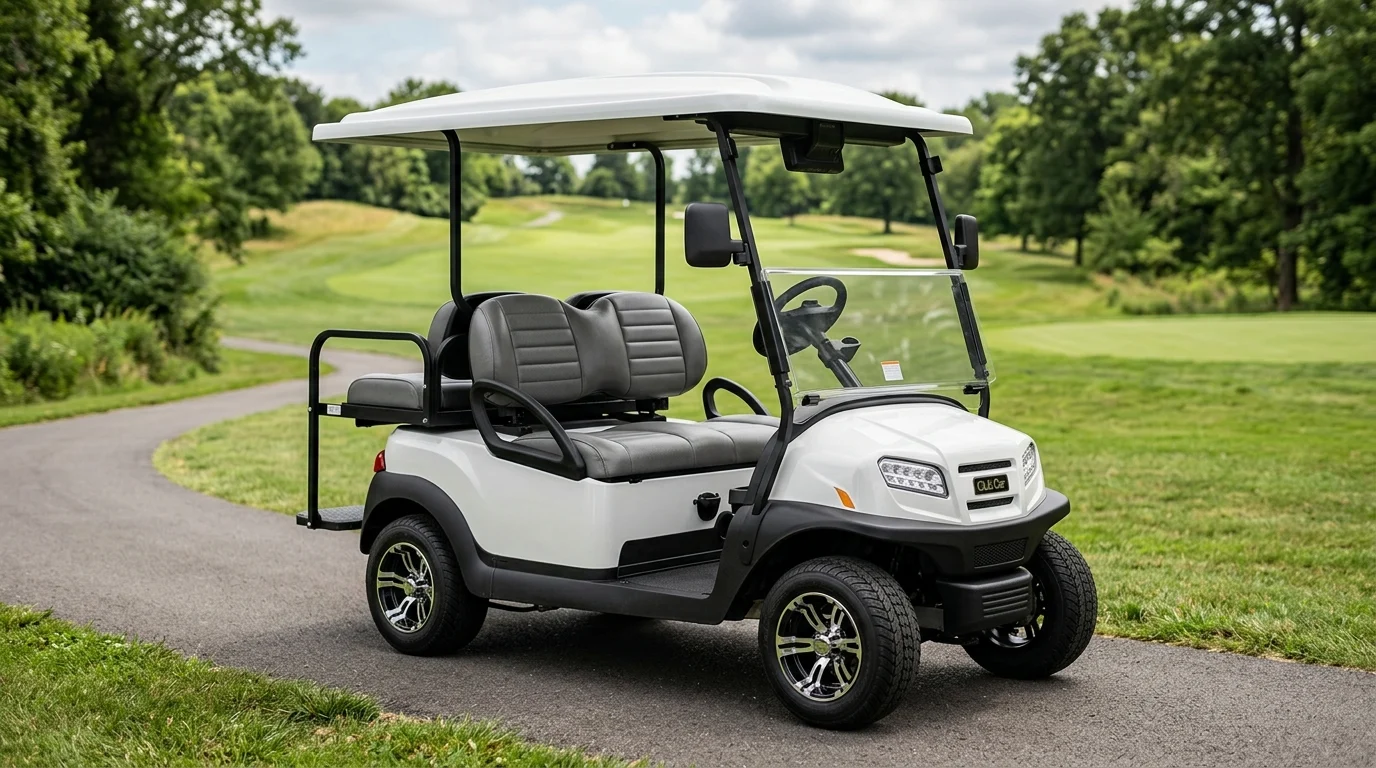
Why Choose a 72V Golf Cart UEV
When buyers hunt for an affordable golf cart, they often expect a basic, low-power vehicle. However, the modern utility electric vehicle (UEV) offers a much more capable alternative. Instead of vague “commercial-grade guts,” these machines feature heavy-duty controllers, upgraded motors, reinforced chassis, and hydraulic brakes at a highly competitive price point. A UEV is a specialized, low-speed electric vehicle built for multi-use tasks that extend well beyond the traditional fairway. Operating at top speeds of 15 to 25 mph (aligning with US Low-Speed Vehicle regulations), these machines pack industrial-level reliability into an accessible frame, bridging the gap between a casual neighborhood cruiser and a heavy-duty maintenance truck without an exorbitant price tag.
Key Benefits of a 72V Lithium Battery
A major advantage lies in the modern 72V lithium battery setup. Upgrading from a standard 48V system to a 72V architecture means pushing higher voltage through the drivetrain. This translates directly to better electrical efficiency, superior hill-climbing torque, and much faster acceleration even under heavy loads. Because a 72V system draws less current to produce the exact same power output, it significantly reduces heat and stress on the battery cables and motor controller.
Add lithium technology to the mix, and the operational perks multiply. As detailed in the comparison table below, lithium batteries are significantly lighter, charge much faster, and last far longer than traditional lead-acid options.
| Feature | 72V Lithium UEV | 48V Lead-Acid Cart |
|---|---|---|
| Charge Time | 3 – 5 hours | 8 – 12 hours |
| Lifespan | 8 – 10 years (2000+ cycles) | 3 – 5 years |
| Energy Density | 3x Higher Gravimetric (Lightweight) | Standard (Heavy) |
| Maintenance | Minimal (No watering) | High (Regular watering) |
| Operating Cost | ~$0.50 – $1.00/charge (est.) | Higher (Frequent replacements) |
However, buyers must also consider the practical caveats of a 72V system. Upgrading or maintaining these higher-voltage setups requires a specific 72V-compatible charger and strictly matched controller and motor components. Furthermore, 72V replacement parts generally carry higher costs, and the increased electrical complexity can make repairs more challenging than standard 48V configurations. Lithium batteries also come with a higher upfront purchase price and require a robust Battery Management System (BMS) and proper thermal management to prevent degradation in extreme temperatures.
How a UEV Differs from a Standard Golf Cart
While a traditional golf cart is designed almost exclusively for rolling over smooth, manicured grass, a UEV is engineered with concrete structural upgrades. It is important to distinguish that “UEV” is a broad product and marketing category, whereas a Low-Speed Vehicle (LSV) is a strict legal classification. An unmodified vehicle cannot seamlessly be both golf-ready and road-legal; achieving street-legal LSV status requires specific safety modifications and registrations.
Those designed for broader utility feature reinforced chassis materials, independent suspensions, and robust braking systems designed to handle pavement, gravel, and light off-road trails. This structural integrity makes it a true utility workhorse capable of managing heavy cargo or steep inclines without compromising stability or safety. However, buyers should note that UEVs are not universally accepted on fairways. Because they are heavier and often feature aggressive tire treads, they can cause significant turf damage. Many golf courses restrict these non-traditional vehicles or require them to be equipped with specific, course-approved turf tires before allowing them on the grass.
Best Uses for a Semi-Automatic 2-Seater UEV
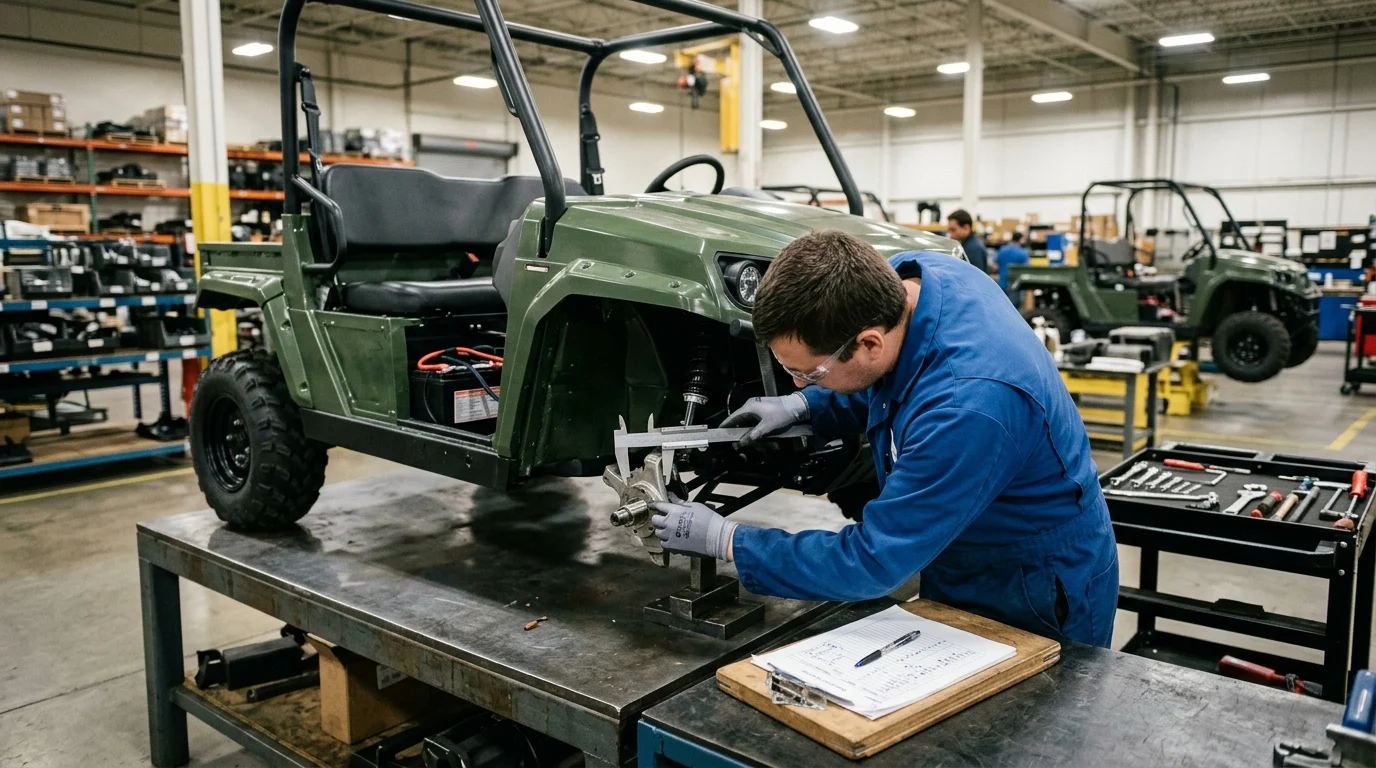
Packing a 72V powertrain into a compact, 2-seater frame creates a highly efficient and nimble machine. By stripping away the extra seating rows found in larger shuttles, manufacturers reduce the overall vehicle weight. This weight reduction directly extends the battery range and significantly improves the vehicle’s agility, making it an ideal solution for specific commercial and recreational applications.
Where a 2-Seater Configuration Works Best
A 2-seater configuration shines brightest in environments where space is at a premium and maneuverability is critical. Because it is narrower and lighter than multi-passenger shuttles, it easily navigates tight golf course paths, crowded resort walkways, and narrow industrial warehouse aisles.
This setup is very well-suited for solo maintenance staff, security personnel on patrol, or light utility work. Real-world applications are vast: college campuses use them for facility maintenance, industrial sites rely on them for warehouse logistics, and event organizers deploy them for targeted transport. Even at airports and hospitals, the compact 2-seater UEV offers highly efficient internal transport without blocking pedestrian traffic. However, buyers must consider its limitations: a 2-seater has strict payload and towing limits compared to full-sized utility trucks, and it cannot serve as a passenger shuttle for larger groups or accommodate a full foursome on the golf course.
How Semi-Automatic Operation Improves Usability
Operating these utility vehicles is remarkably straightforward, though the marketing term “semi-automatic” can be slightly misleading. In the context of electric UEVs, almost all modern vehicles use a clutch-free, single-speed direct-drive system with a simple forward, neutral, and reverse switch. While this pedal-and-go system completely eliminates the need for a manual clutch or mechanical shifting, it is the industry norm for electric vehicles rather than a unique technological differentiator.
Still, for commercial facilities managing large fleets with multiple drivers of varying skill levels, this standard ease of use remains a massive operational advantage. It removes the steep learning curve, ensuring that anyone on the maintenance or security team can hop in and drive safely on day one. Furthermore, the smooth, clutch-free operation reduces operator fatigue during long, demanding shifts, allowing workers to focus on their actual tasks rather than wrestling with vehicle controls.
How to Compare Costs, Accessories, and Compliance
Upfront price tags only tell a fraction of the story. Evaluating the true value of a utility electric vehicle requires a deep dive into long-term operational savings, necessary add-ons, and local road rules.
Key Takeaways
- Choose a 72V lithium UEV if you need better torque, faster acceleration, and improved efficiency over a typical 48V lead-acid golf cart.
- Expect lithium battery charging to take about 3 to 5 hours, compared with 8 to 12 hours for many lead-acid configurations.
- Plan for lower routine maintenance because lithium batteries do not require watering and can deliver 2000+ cycles with proper management.
- Verify that any road-use claims are backed by actual LSV safety equipment, registration requirements, and local legal compliance.
- Check the full powertrain compatibility before purchase, including the 72V charger, controller, motor, BMS, and thermal protection.
Frequently Asked Questions
What makes a 72V lithium golf cart different from a standard 48V cart?
A 72V lithium setup delivers better efficiency, stronger hill-climbing torque, quicker acceleration, and less heat stress on electrical components compared with many 48V lead-acid carts.
Is this 2-seater UEV only for golf courses?
No. It can be golf-ready with optional accessories, but its utility-focused build also suits resorts, campuses, farms, communities, and light maintenance work.
How long does a 72V lithium battery take to charge?
Typical charging time is about 3 to 5 hours, much faster than many lead-acid systems that can take 8 to 12 hours.
Does a UEV qualify as a street-legal low-speed vehicle?
Not automatically. UEV is a product category, while LSV is a legal classification requiring specific safety equipment, compliance, and local registration.
What are the maintenance advantages of lithium batteries?
Lithium batteries need minimal routine maintenance, require no watering, are lighter than lead-acid batteries, and can last 8 to 10 years with proper care.
Post time: Jul-10-2026