
Why Motorcycle Mirrors Vibrate
Riding a motorcycle with blurry mirrors is like trying to read a text message while jogging—annoying and straight-up dangerous. Most riders have experienced that dreaded blur right when they hit the powerband or reach higher engine speeds (typically between 4,000–6,000 RPM for V-twins and 7,000–9,000 RPM for inline-fours). This harmonic resonance, which often peaks at frequencies between 50–150 Hz, travels right from the engine block, through the frame and triple-clamp, and straight into the handlebars. Keep in mind that while mirror construction plays a role, severe vibration can also originate from worn engine mounts or poor wheel balance. When cruising on the highway, this vibration turns the headlights behind you into long, indistinguishable streaks of light, making it impossible to gauge the distance or speed of approaching traffic.
Common Causes of Mirror Jitter
While engine resonance initiates the vibration, the main culprits behind severe mirror jitter are structural gaps and insufficient material rigidity within the mirror itself. When manufacturers use cheap plastics (often with 1–2mm wall thicknesses) or standard stamped aluminum, the mirror stalk acts like a tuning fork. Every bump in the road and engine pulse gets amplified through these lightweight, hollow structures. Multi-piece mirror assemblies with loose ball joints or cheap rubber isolators degrade rapidly over time, frequently losing internal tension within 3 to 6 months of daily riding. Once the internal friction wears down, the mirror develops a micro-wobble that worsens significantly at highway speeds, turning minor engine vibrations into major visual distortions by the time they reach the mirror glass.
How Rigid CNC Aluminum Reduces Vibration
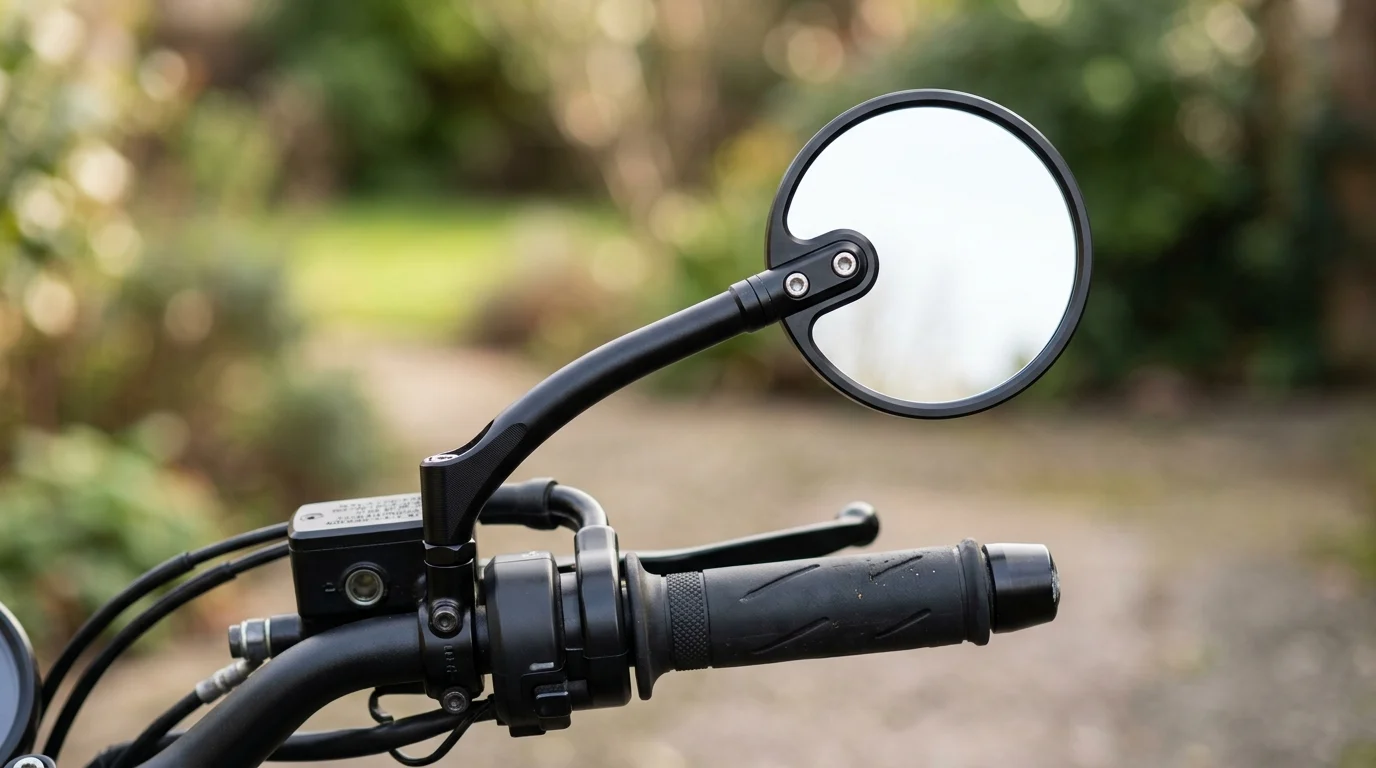
Upgrading to high-strength aluminum changes the dynamics of the mirror assembly by addressing the root causes of jitter. Unlike ordinary stamped metal, one-piece CNC precision machining (typically utilizing 6061-T6 or 7075 aluminum alloys) eliminates the flexible assembly gaps found in traditional spliced structures. Because aircraft-grade aluminum provides a denser, more rigid construction than hollow plastics, the lack of internal joints and added mass help isolate the glass from high-frequency engine buzz. However, it is worth noting that increasing mass and rigidity shifts the resonant frequency rather than universally eliminating vibration; on some bikes, heavier bar-end mirrors may actually worsen blur at specific RPMs. The Xmaxvision CNC arm relies on this integrated structure to resist deformation under high wind loads exceeding 80 mph (130 km/h). Furthermore, an industrial Type II anodized finish (typically 15–25 microns thick) protects the metal, ensuring reliable performance and long-term durability in harsh road and weather conditions without fading or pitting.
Key Specs for Stable Visibility

Getting rid of the shakes is only half the battle; the actual glass and mounting hardware need to provide an unobstructed field of view. Evaluating the physical dimensions and fitment specs is crucial for achieving stable, long-term visibility without the need for constant roadside readjustment. A well-engineered mirror complements the bike’s ergonomics. Buyers should independently verify whether aftermarket options like the Xmaxvision mirror meet regional legal requirements and safety certifications, such as DOT (FMVSS 111) or ECE (R81) standards, which generally mandate a minimum reflective surface area of 69 sq cm (10.7 sq in) for compliance.
Mirror Size and Viewing Angle
A standardized 13.5 x 8 cm high-clarity flat glass lens yields a surface area of 108 sq cm, hitting the sweet spot for rearward visibility. It provides a wide, distortion-free view that improves situational awareness in heavy traffic, allowing riders to spot blind-spot lurkers with a quick glance. However, riders should note that flat glass offers a slightly narrower field of view compared to standard convex motorcycle mirrors (which typically use an R1200 to R1500 curvature radius), requiring more deliberate head movement to check blind spots. Crucially, many jurisdictions explicitly require convex mirrors for motorcycles; flat lenses may fail homologation or safety inspections even if they improve optical clarity. Combined with a robust adjustable angle design, riders can freely fine-tune their viewing angle to match an upright commuting posture or a tucked-in aggressive stance. The optical clarity of the glass ensures that distance perception remains accurate, which is critical when making split-second lane changes.
| Specification | Standard Market Mirror | Xmaxvision CNC Arm Mirror |
|---|---|---|
| Core Material | ABS Plastic / Stamped Metal | Aircraft-Grade Aluminum (e.g., 6061-T6) |
| Manufacturing | Injection Molded / Spliced | One-Piece CNC Machined |
| Lens Dimensions | Variable / Convex | 13.5 x 8 cm Flat High-Clarity Glass |
| Reflective Area | Often < 69 sq cm | 108 sq cm |
| Structural Design | Multi-piece hollow construction | One-piece solid CNC body |
| Fitment Range | Fixed Thread Pitches | 12-18mm Expansion Bushes |
Adjustable Expansion Bush Fitment
A premium mirror is useless if it cannot grip the handlebars properly. This is where the 12-18mm adjustable expansion bushes come into play. These bushes support universal installation on conventional 7/8-inch (22mm) or 1-inch (25.4mm) motorcycle handlebars, sliding directly into hollow bar ends. Riders should verify compatibility beforehand, as these will not fit non-hollow bars, setups with integrated bar-end weights, bar-end turn signals, or those with unusually thick walls. This non-destructive fitment adapts to the inner diameter of most mainstream handlebars. By locking the mirror securely (typically requiring 5–7 Nm of torque), the expansion system avoids the loose shaking caused by long-term riding vibration, keeping the setup rigid even during aggressive cornering. Because these mount at the bar ends, riders should be aware that the mirrors significantly increase overall handlebar width (often adding 3–5 inches / 75–125mm per side). This added width can reduce clearance for tight lane-splitting and requires extra space for garage storage, in addition to leaving the mirrors more exposed to damage in the event of a tip-over.
Choosing and Installing the Right Mirror
Throwing a new mirror—or a complete pair—on a bike is usually a quick 15- to 30-minute weekend project, but doing it right ensures the hardware stays locked in place for the long haul.
Key Takeaways
- If your mirrors blur around 4,000–6,000 RPM on a V-twin or 7,000–9,000 RPM on an inline-four, engine resonance is likely a major cause.
- Choose a one-piece CNC aluminum mirror arm to reduce flexible joints, micro-wobble, and deformation under highway wind loads.
- Verify that your handlebar accepts 12–18 mm expansion bushes before ordering a bar-end mirror.
- Inspect engine mounts, wheel balance, tires, and handlebar hardware if mirror vibration persists after upgrading the mirror.
- Look for an anodized aluminum finish because a 15–25 micron protective layer can improve resistance to weathering and corrosion.
Frequently Asked Questions
Why do motorcycle mirrors blur at certain RPMs?
Mirror blur often comes from harmonic resonance traveling from the engine through the frame and handlebars. It commonly appears around 4,000–6,000 RPM on V-twins and 7,000–9,000 RPM on inline-four motorcycles.
Can a CNC aluminum mirror completely eliminate vibration?
Not always. A rigid CNC aluminum arm can reduce flex and joint looseness, but vibration may still come from engine mounts, wheel balance, tires, or the bike’s natural resonance at specific RPMs.
What makes aircraft-grade aluminum useful for motorcycle mirrors?
Aircraft-grade aluminum offers higher rigidity than thin plastic or stamped metal. When CNC-machined into a one-piece arm, it helps reduce assembly gaps, resist deformation, and maintain mirror position at highway speeds.
Will the Xmaxvision mirror fit my handlebars?
Check your bar-end inner diameter before buying. This style is intended for handlebars using 12–18 mm expansion bushes, but fitment can vary depending on grip, throttle tube, and bar-end construction.
What should I check if my new mirror still vibrates?
Inspect worn engine mounts, loose handlebar hardware, unbalanced wheels, damaged tires, and loose mirror joints. Severe vibration is often caused by the motorcycle, not only by the mirror assembly.
Post time: Aug-13-2026