
Can a Budget Golf Cart Really Reach 100 km
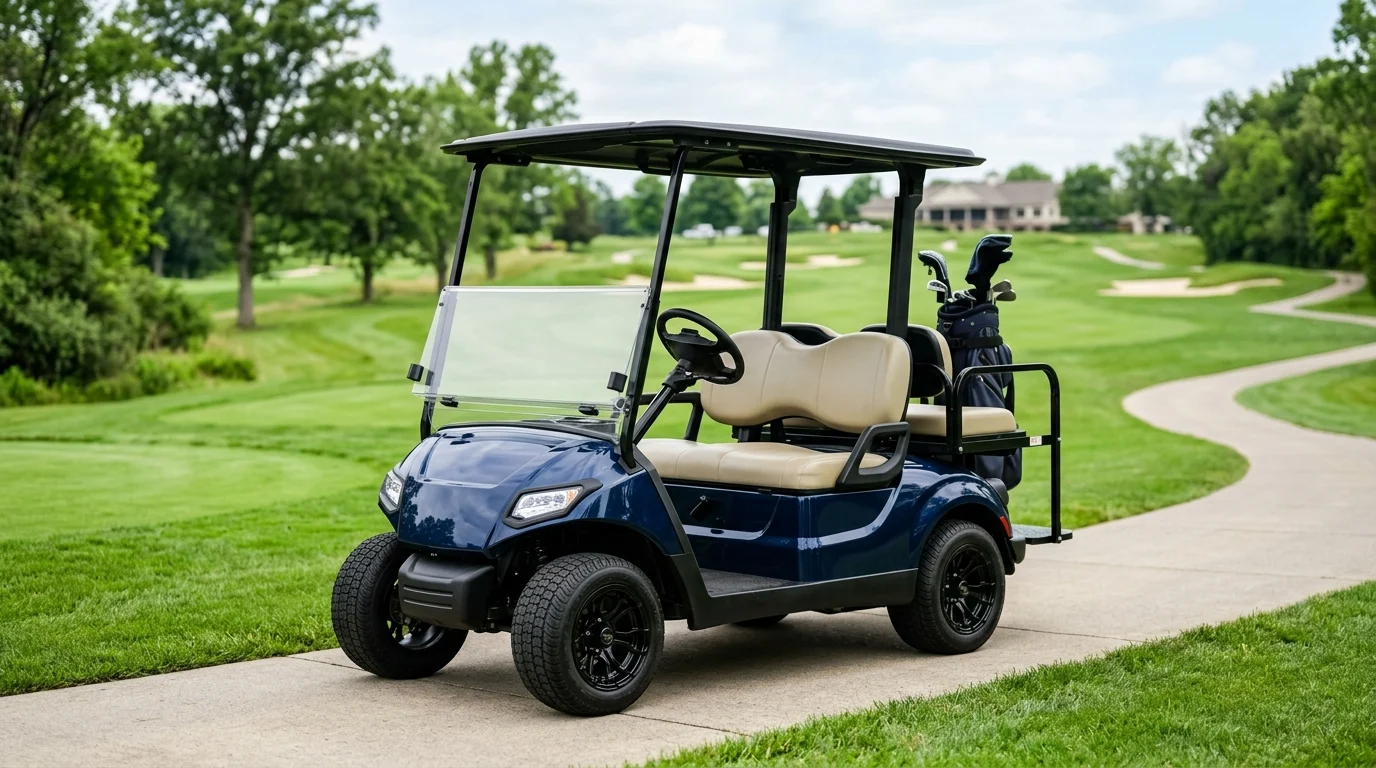
When evaluating budget-friendly fleet options—typically falling into the $4,000 to $6,000 price bracket—a 100km range claim often raises skeptical eyebrows. The Zhejiang ZXD-4 enters the utility market boasting that impressive figure, alongside a regulated 30km/h top speed and a semi-automatic drivetrain designed for easy operation. But can a cost-effective imported golf cart actually hit that triple-digit kilometer mark in the wild? Diving past the marketing sheet is essential to understand exactly what this vehicle brings to the pavement and how it will perform under daily operational stress.
What Buyers Should Know About the ZXD-4
Look closely at the core specifications before integrating a new model into daily operations. The ZXD-4 is built around a semi-automatic configuration that simplifies operation for casual users while maintaining mechanical control for standard utility tasks. It caps out at a 30km/h top speed, which aligns perfectly with campus regulations, park speed limits, and community zoning laws. However, that headline 100km range depends on specific operational parameters. Furthermore, it is critical to verify the factory battery specifications—typically a 48V or 60V system with a 100Ah to 150Ah capacity. Whether the cart uses traditional lead-acid or modern lithium-ion chemistry dictates charging time, cycle life, and total cost of ownership. Treating the maximum range as a guarantee without factoring in these baseline variables will inevitably lead to stranded vehicles.
How Lab Range Compares With Real-World Range
The official 100km data point is born in a controlled laboratory environment using manufacturer constant-speed protocols. Standardized flat-surface tests are conducted under ideal conditions, typically assuming a minimal payload, factory-fresh battery packs, zero wind resistance, and optimal ambient temperatures. In real-world applications, those perfect conditions vanish. Introduce a full passenger load, a 15-degree incline on a golf course, or rougher terrain, and that theoretical maximum drops rapidly. Heavy loads and hilly terrain significantly increase power draw because the electric motor requires a substantial, sustained current to overcome gravity and rolling resistance. Consequently, realistically plan for an illustrative working range closer to 60-70km during demanding shifts, assuming a standard battery configuration and moderate payload.
How Drivetrain, Load, and Driving Style Affect Range
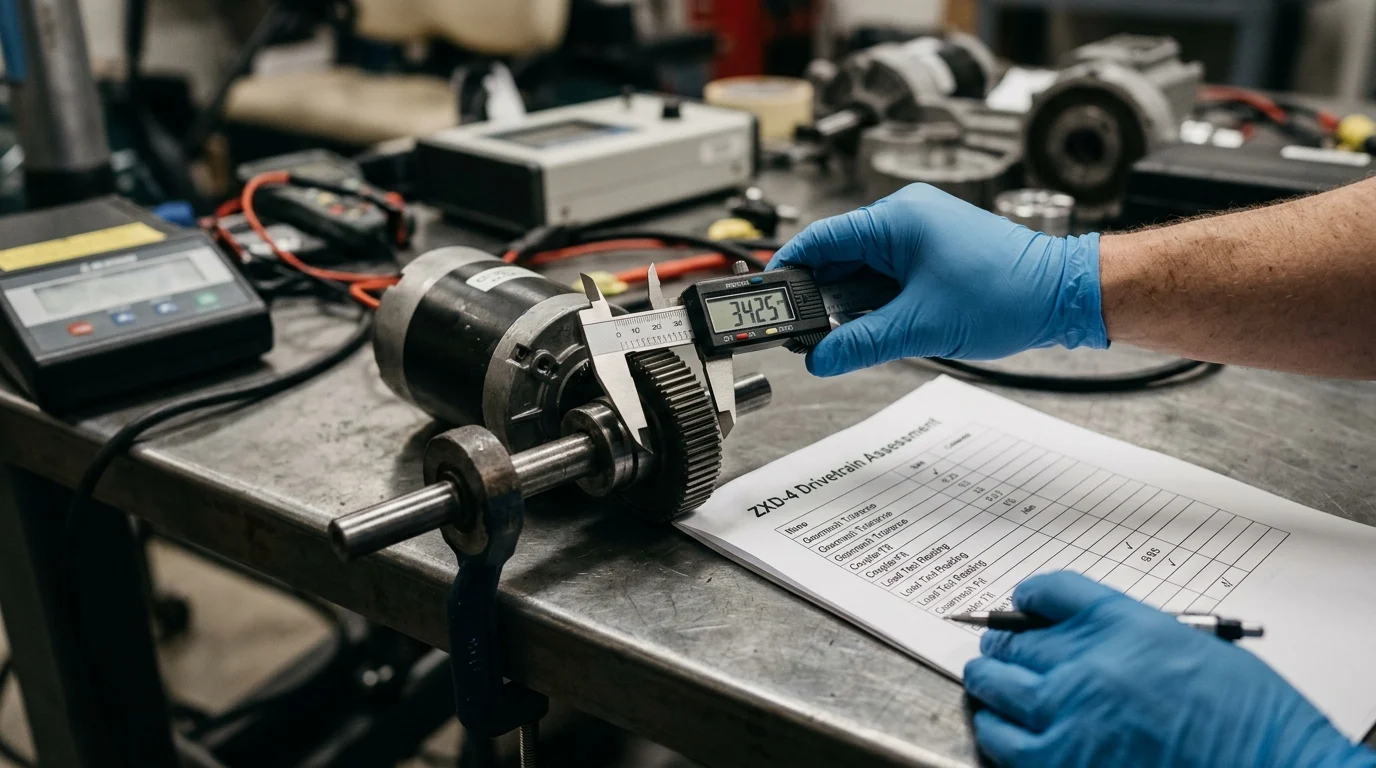
Energy consumption in light electric vehicles is a delicate balance of mechanical efficiency and environmental factors. Even with a robust battery pack, the physics of moving mass dictates whether a vehicle limps back to the charging bay or finishes the shift with juice to spare. Let’s break down the variables that dictate actual mileage and look at how real-world demands chip away at that laboratory baseline.
| Operational Variable | Ideal Test Condition | Real-World Scenario | Estimated Range Penalty (Illustrative) |
|---|---|---|---|
| Payload Weight | Minimal payload | Full passengers/gear | -15% to -25% |
| Terrain Profile | Flat, smooth asphalt | Hilly, mixed gravel/grass | -20% to -30% |
| Ambient Temperature | 20°C to 25°C | Extreme cold or hot weather | -20% to -40% |
| Driving Style | Steady 15km/h cruising | Frequent hard acceleration to 30km/h | -10% to -15% |
| Tire Pressure | Factory spec | Under-inflated | -5% to -10% |
How the Semi-Automatic Drivetrain Works
The semi-automatic drivetrain on the ZXD-4 offers a practical middle ground between standard single-speed reduction drives and fully automatic continuous variable transmissions. Because specific mechanisms can vary by production run, buyers should verify the exact transmission type with the supplier before purchase. Generally, these setups mean the driver plays an active role in energy conservation. Leaving the cart in an inappropriately low gear setting while attempting to reach its 30km/h top speed will unnecessarily strain the electric motor, reduce efficiency, and rapidly drain the battery reserves.
Operating Tips to Protect Golf Cart Range
Maximizing the lifespan of a single charge requires proactive management and smart driving habits. First, hard acceleration is an enemy of battery life; easing into the throttle preserves drivetrain components and prevents significant current draws from the electrical reserves. Monitor tire pressure rigorously, as under-inflated tires increase rolling resistance and force the motor to work harder. Environmental factors are equally critical: as noted in the data above, extreme weather severely impacts electric vehicle range, making temperature management a vital consideration for year-round planning. Crucially, never drain the battery entirely. Deep discharging degrades cell health over time, so it is best practice to utilize opportunity charging or finish charging promptly after heavy-load trips. Finally, ensure adequate charging infrastructure—matching the cart’s voltage requirements and allowing sufficient downtime for full-charge durations—to keep the fleet operational.
Where the ZXD-4 Golf Cart Makes Sense
Pinpointing the right operational environment is crucial for getting the maximum return on investment from any budget-tier utility vehicle. The ZXD-4 isn’t trying to be a rugged, off-road beast, nor is it a heavy-duty transport truck. Instead, it occupies a specific, useful niche where light capability meets daily utility, supported by strategic design choices that make it adaptable to manicured environments.
Why 20 cm Ground Clearance Matters
A standout specification for this model is its 20cm ground clearance. In the world of standard, low-slung golf carts, this is a generous lift that significantly reduces the risk of chassis scratches when navigating bumpy campus paths, steep speed bumps, or uneven park terrain. However, manage expectations carefully. While that 20cm clearance enhances obstacle navigation over minor hazards, the cart is not engineered for heavy off-road conditions. Deep pits, large barriers, and heavy mud trails should be bypassed to prevent suspension damage and avoid stressing the drivetrain beyond its intended operational limits.
Best Uses for the ZXD-4
Theoretical range and ground clearance aside, the ZXD-4 truly shines in structured, localized environments. It is a good fit for campus sightseeing tours, gated community patrols, and short local transit where operational speeds rarely need to exceed that 30km/h threshold.
Key Takeaways
- Treat the ZXD-4’s 100 km range as a best-case lab figure, not a guaranteed daily operating distance.
- Plan for a more realistic working range of about 60–70 km when carrying passengers, climbing hills, or driving on mixed surfaces.
- Verify the battery voltage, Ah capacity, and chemistry before purchase because these factors strongly affect range, charging time, and ownership cost.
- The 30 km/h top speed fits controlled low-speed environments such as campuses, resorts, parks, and gated communities.
- The 20 cm ground clearance supports light utility and sightseeing routes, but buyers should avoid assuming true off-road capability.
Frequently Asked Questions
Can the Zhejiang ZXD-4 really reach 100 km on one charge?
It may reach 100 km under ideal factory test conditions, but real-world use is usually lower. With passengers, hills, grass, or stop-start driving, buyers should plan closer to about 60–70 km.
What is the top speed of the ZXD-4 golf cart?
The ZXD-4 is listed with a regulated top speed of 30 km/h, making it suitable for campuses, parks, resorts, gated communities, and other low-speed transport zones.
Why does the battery type matter for range and cost?
Lead-acid and lithium batteries differ in charging time, cycle life, weight, and long-term cost. Always confirm whether the cart uses a 48V or 60V pack and its Ah capacity before buying.
How does terrain affect the ZXD-4’s driving range?
Hills, gravel, grass, and rough paths increase motor workload and battery drain. A route with inclines or mixed surfaces can reduce range by 20% to 30% or more.
Is 20 cm ground clearance enough for sightseeing use?
A 20 cm ground clearance is practical for light utility, resort, park, and sightseeing routes, but it is not intended for aggressive off-road driving or heavily rutted terrain.
Post time: Aug-18-2026