
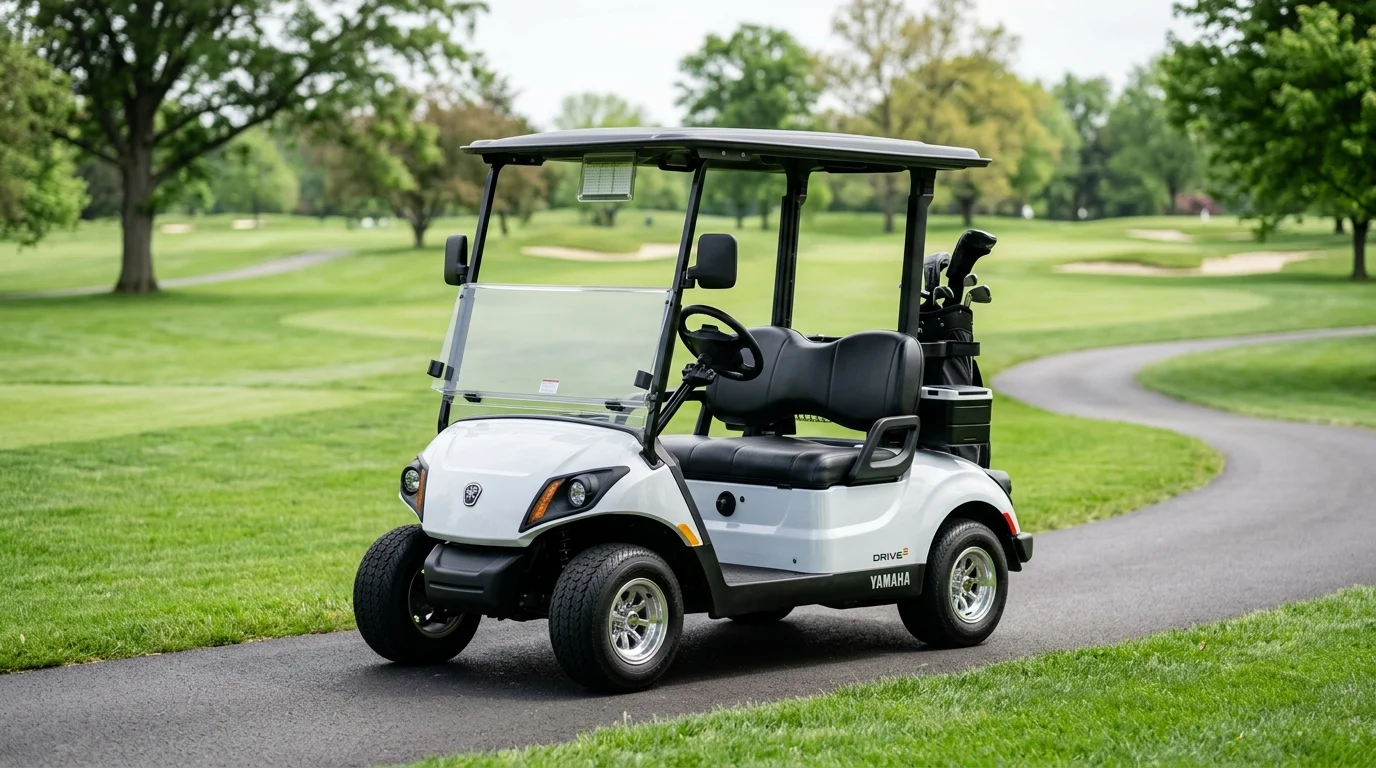
Why Choose a Heavy-Duty Golf Cart
You already know the standard golf cart—a basic, low-speed runabout designed for short trips from the clubhouse to the first tee. However, when you demand real utility, traditional units can feel noticeably underpowered. Upgraded models with high-torque AC motors and reinforced chassis deliver reliable, sustained strength. Keep in mind that these enhanced capabilities require a careful look at Total Cost of Ownership (TCO). Beyond a higher upfront purchase price, buyers must budget for battery replacement intervals—where long-lasting lithium-ion packs cost more initially than lead-acid but offer better long-term value—as well as ongoing maintenance. Additionally, true Low-Speed Vehicle (LSV) compliance is not automatic. You will need to check local regulations, which often mandate formal registration, insurance, and specific street-legal equipment like DOT-approved lighting, mirrors, seatbelts, and a registered VIN.
Where Standard Golf Carts Fall Short
Standard models usually run on basic 36V DC systems designed for flat pavement and light passenger transport. When tasked with real work, these fairway cruisers quickly reveal their limitations. Without dedicated cargo beds, hauling equipment becomes a frustrating balancing act, and even utility-bed models offer highly restricted capacities. Because basic DC drivetrains lack sustained torque under load, these carts struggle the moment you introduce steep inclines, damp soil, or heavier gear. Users often experience sluggish performance, and basic suspension systems—which may include simple leaf or coil springs depending on the manufacturer—easily bottom out on rougher terrain, leading to an uncomfortable ride. Furthermore, ordinary carts lack the structural rigidity and ground clearance required for dynamic, multi-terrain use.
Key Performance Gains of Heavy-Duty Models
Upgraded models feature strengthened transmission parts, beefier axles, and advanced controllers that manage power delivery more efficiently. By utilizing high-torque AC motors, these carts outperform basic DC systems by providing superior sustained power and efficiency, especially when hauling heavy loads. It is important to distinguish between Gross Vehicle Weight Rating (GVWR)—the maximum total weight of the cart, passengers, and cargo combined—and payload capacity. In heavy-duty models, the payload capacity alone can easily jump to 800 to 1,200 lbs or more, allowing you to move people and heavy supplies simultaneously. This robust drivetrain ensures your cart runs steadily on grass, gentle slopes, and loose gravel surfaces, while also requiring different long-term maintenance protocols compared to simpler DC setups.
Just keep in mind that while they are rugged, they are not built for tough off-road trails or extreme rock crawling. It is all about practical, everyday durability for demanding environments. Here is a quick breakdown of how these two classes typically stack up against each other:
| Feature | Standard Golf Cart | Heavy-Duty Golf Cart |
|---|---|---|
| Voltage System | 36V or basic 48V DC | High-output 48V or 72V AC |
| Payload Capacity | 500 – 800 lbs | 800 – 1,200+ lbs |
| Cargo-Bed Capacity | 250 – 300 lbs (if equipped) | 400 – 800+ lbs |
| Terrain Focus | Paved paths, flat turf | Gravel, grass, moderate slopes |
| Suspension | Basic leaf springs | Heavy-duty shocks, lifted options |
Note: All figures represent general industry ranges. Buyers must verify exact voltage, payload, and cargo ratings against the manufacturer’s official GVWR and specification sheets.
What an 80 km Golf Cart Range Means
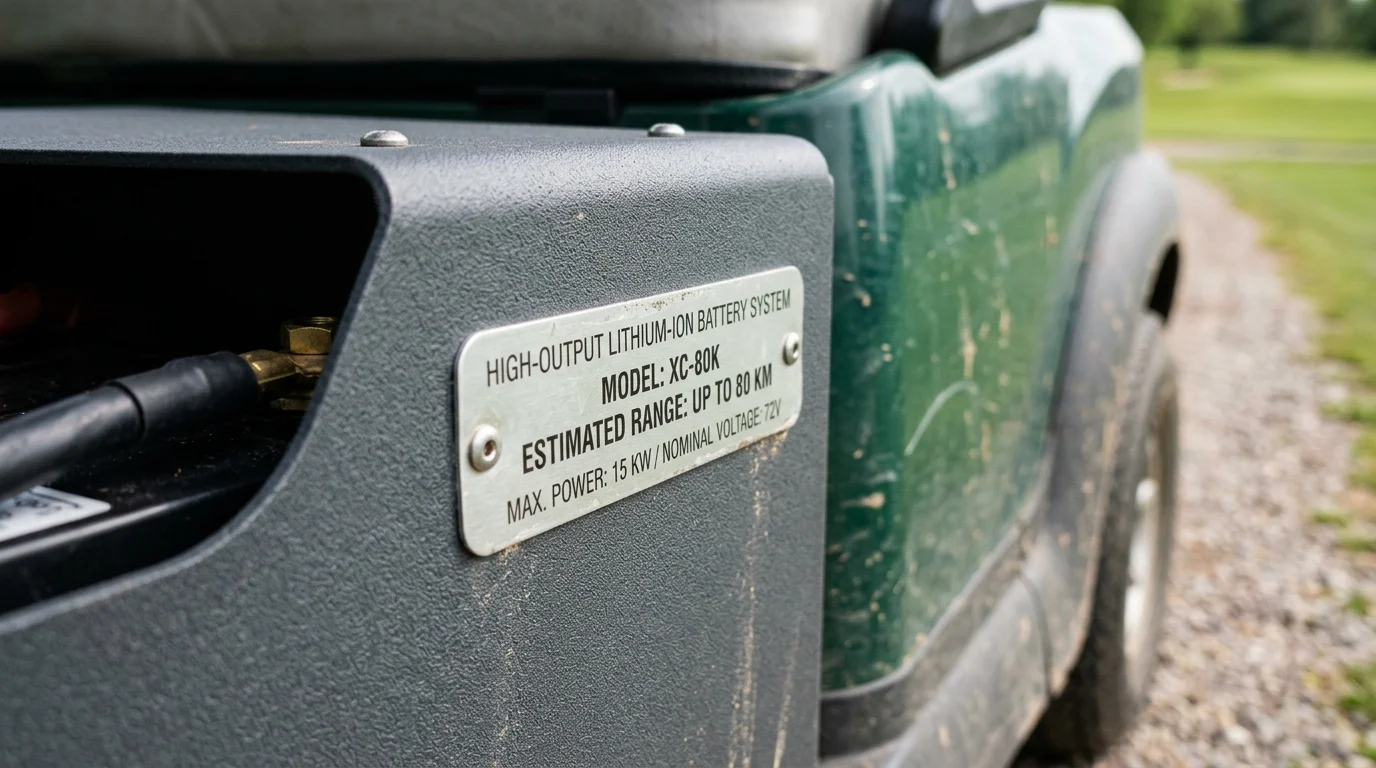
Range anxiety isn’t just for electric highway cars; it hits golf cart owners too. An 80km (roughly 50 miles) driving distance completely changes how you use your cart. Instead of plugging it in after every quick errand, you get a reliable vehicle that supports longer daily commutes across sprawling properties, large farms, or expansive gated communities. However, achieving this 80km range typically requires a modern lithium-ion battery configuration. Traditional lead-acid heavy-duty carts rarely achieve this distance due to weight and energy-density limitations. Buyers should also factor in the charging infrastructure required and the eventual replacement timelines for lithium-ion battery packs, which carry a higher replacement cost than lead-acid alternatives but typically last significantly longer.
How to Compare Flat-Ground Range Claims
When you see that impressive 80km spec, you need to understand exactly how manufacturers calculate it. That marketed range originates from standard flat-ground testing under light-load, steady-speed conditions—essentially a best-case scenario designed to show the maximum potential of the battery pack.
In the real world, your actual mileage drops when you carry heavy items, climb steep slopes, or run the cart in cold weather. Cold-weather efficiency loss varies significantly depending on whether you use traditional lead-acid or modern lithium-ion batteries, as well as the specific brand and climate. Even stopping and starting frequently at neighborhood intersections or driving over soft, muddy ground will reduce your maximum range. By combining the flat-ground baseline with an understanding of these real-world efficiency factors, you can plan realistic daily routes without constantly watching the battery meter.
Maintenance Tips to Protect Battery Endurance
To actually hit those high-endurance numbers and extend your cart’s service life, routine care is essential, and the steps depend heavily on your battery chemistry. For traditional lead-acid batteries, regularly check terminals for corrosion and monitor water levels. If you are running a modern 80km-capable lithium-ion setup, physical maintenance is minimal, but you should keep the firmware updated via the onboard Battery Management System (BMS).
Tire pressure is another massive factor for endurance. Keep your tires inflated to the specific range recommended by your manufacturer; under-inflated tires create rolling drag that noticeably decreases your driving distance.
Best Uses for Custom Heavy-Duty Golf Carts
You know that traditional standard golf carts are fine for simple, short-distance runs, but their limited power and mediocre battery life restrict where you can actually take them. When you step up to a heavy-duty model, you unlock a much wider range of practical applications. With strengthened transmission parts and a high-capacity battery supporting up to an 80km range (under flat-ground, light-load conditions), these upgraded carts handle far more than just 18 holes.
Benefits of Automotive-Grade Custom Colors
Aesthetics matter when you manage a fleet for a commercial site or a high-end community. Instead of settling for standard factory colors, you can select custom options featuring automotive-grade, anti-fading paint. This specialized coating is specifically designed to withstand long-term outdoor exposure without peeling or losing its shine. Whether you need to match your corporate branding or simply want a personalized look, this high-quality finish ensures your golf cart looks premium year after year.
Ideal Use Cases for Resorts, Campuses, and Communities
Because heavy-duty golf carts run steadily on grass, gentle slopes, and gravel surfaces, they easily outperform basic models in diverse environments. Here is where they truly shine:
- Resorts and Scenic Spots: Shuttle guests and their heavy luggage effortlessly. The upgraded load capacity handles the extra weight, though you should note that frequent stops, cold weather, and heavy cargo will reduce the optimal 80km range.
- University and Corporate Campuses: Security and maintenance teams can rely on the heavy-duty power group for reliable daily commutes across expansive grounds.
- Residential Communities: Perfect for upscale neighborhood cruising where customized styling fits right in.
| Capability | Standard Golf Cart | Heavy-Duty Golf Cart |
|---|---|---|
| Ideal Terrain | Paved paths, flat turf | Grass, gravel, gentle slopes |
| Exterior Finish | Basic factory options | Automotive-grade custom paint |
| Load Handling | Light passenger transit | Upgraded transmission for cargo |
Just remember, while these carts conquer varied everyday terrains, they are not built for tough off-road trails. Stick to their intended environments, avoid harsh acceleration to protect the core power assemblies, and you will get exceptional longevity and performance.
Key Takeaways
- Choose a heavy-duty golf cart when standard 36V models feel underpowered for passengers, equipment, slopes, or mixed-surface driving.
- Compare payload capacity and GVWR before buying, because payload may reach 800 to 1,200 lbs or more but still has strict operating limits.
- Evaluate total cost of ownership by factoring in battery type, replacement intervals, maintenance needs, and the higher upfront cost of upgraded components.
- Verify local LSV requirements before road use, including registration, insurance, VIN status, DOT lighting, mirrors, and seatbelts.
- Consider a 72V, 3.5kW, 6-seater model with up to 80 km of range if you need practical passenger transport for resorts, campuses, communities, or sightseeing operations.
Frequently Asked Questions
What makes a heavy-duty golf cart different from a standard golf cart?
A heavy-duty golf cart keeps a compact cart format but adds a reinforced chassis, upgraded suspension, stronger axles, and a higher-torque motor for better performance with passengers, cargo, slopes, and mixed surfaces.
Is a heavy-duty golf cart the same as a UTV?
No. A heavy-duty golf cart is built for practical transport, sightseeing, campuses, resorts, and light utility work, while a UTV is designed for more aggressive off-road use and rougher terrain.
How far can a 72V heavy-duty golf cart travel on one charge?
The featured 72V semi-automatic 6-seater model lists an estimated range of up to 80 km, though real-world distance depends on passenger load, terrain, speed, battery condition, and driving habits.
Can a heavy-duty golf cart carry both passengers and cargo?
Yes. Many heavy-duty models are designed for higher payload demands, with some reaching 800 to 1,200 lbs or more, but always check the specific payload rating and GVWR before loading.
Are heavy-duty golf carts street legal?
Not automatically. Low-Speed Vehicle compliance depends on local rules and may require registration, insurance, a VIN, DOT-approved lighting, mirrors, seatbelts, and other street-legal equipment.
Post time: Aug-19-2026