

Can a Stock Motorcycle Mirror Match a Right-Side Auxiliary Mirror
Riders rely heavily on rearview mirrors to monitor traffic and anticipate hazards. While many mid-to-high-end motorcycles come equipped with excellent OEM mirrors, budget and entry-level bikes often feature unstable original mirrors that shake under road vibration. When cruising down the highway, a blurred reflection of the vehicles behind is a major safety hazard. So, can a basic stock mirror beat a premium upgrade like the Xmaxvision CNC mirror? Generally, no: while stock mirrors are cost-effective, the Xmaxvision’s rigid aluminum build and wider field of view decisively outperform standard factory plastic units in stability and clarity.
Upgrading from a factory setup to a dedicated right-side mirror—whether replacing the stock unit or adding an auxiliary one—can transform situational awareness. The goal is to eliminate dangerous blind spots that standard equipment often misses. Achieving this requires understanding where budget stock components fall short, why a right-side upgrade is particularly useful for monitoring highway merges, and what specifications actually matter.
Common Limitations of Factory Motorcycle Mirrors
Most factory motorcycle mirrors on budget models are built with cost-saving injection-molded plastic housings. While lightweight, these materials lack the rigidity needed to resist engine and road resonance, causing visual distortion at higher speeds.
Furthermore, stock mirrors frequently utilize standard flat glass with a narrow field of view. Quality control on budget factory mirrors can also be inconsistent, with some riders experiencing noticeable visual distortion at the outer edges of the glass. When upgrading, it is important to note whether your replacement uses flat or convex glass; while convex mirrors offer a wider view, they can alter distance judgment, making approaching vehicles appear farther away than they actually are.
Key Features to Compare Before Upgrading
Before investing in an upgrade, always compare the construction materials, aerodynamic profile, and adjustability. Moving from a plastic housing to a machined metal one is an effective way to combat structural resonance. Increased mass typically dampens vibration, providing a much steadier image than lightweight plastic alternatives. However, heavier CNC aluminum housings come with downsides, such as increased crash inertia and a higher risk of thread damage to handlebar mounts during an impact.
Additionally, road-legal certifications are a primary practical concern. Many jurisdictions require homologated mirrors, so always check for DOT, E-mark, or SAE certifications, and verify local laws regarding minimum legal glass-size requirements before replacing stock equipment. It is also wise to consider whether the mirror includes breakaway or folding features, which are crucial for crash safety and parking in tight areas.
Below is a comparison of standard factory setups versus high-quality machined upgrades:
| Feature | Stock Plastic Mirrors | CNC Aluminum Upgrades |
|---|---|---|
| Housing Material | Injection-molded ABS plastic | Billet aluminum (often marketed as “aircraft-grade”) |
| Vibration Resistance | Low (blurs at high RPMs) | High (rigid structure reduces resonance) |
| Typical Lifespan | Shorter (prone to sun fading) | Longer (corrosion and UV resistant) |
| Average Cost Band | Budget-friendly | Premium pricing |
Selecting a mirror with a robust build ensures that the reflection remains stable, allowing for split-second decisions on the road.
What Makes the Xmaxvision 8–10mm CNC Oval Motorcycle Mirror Different
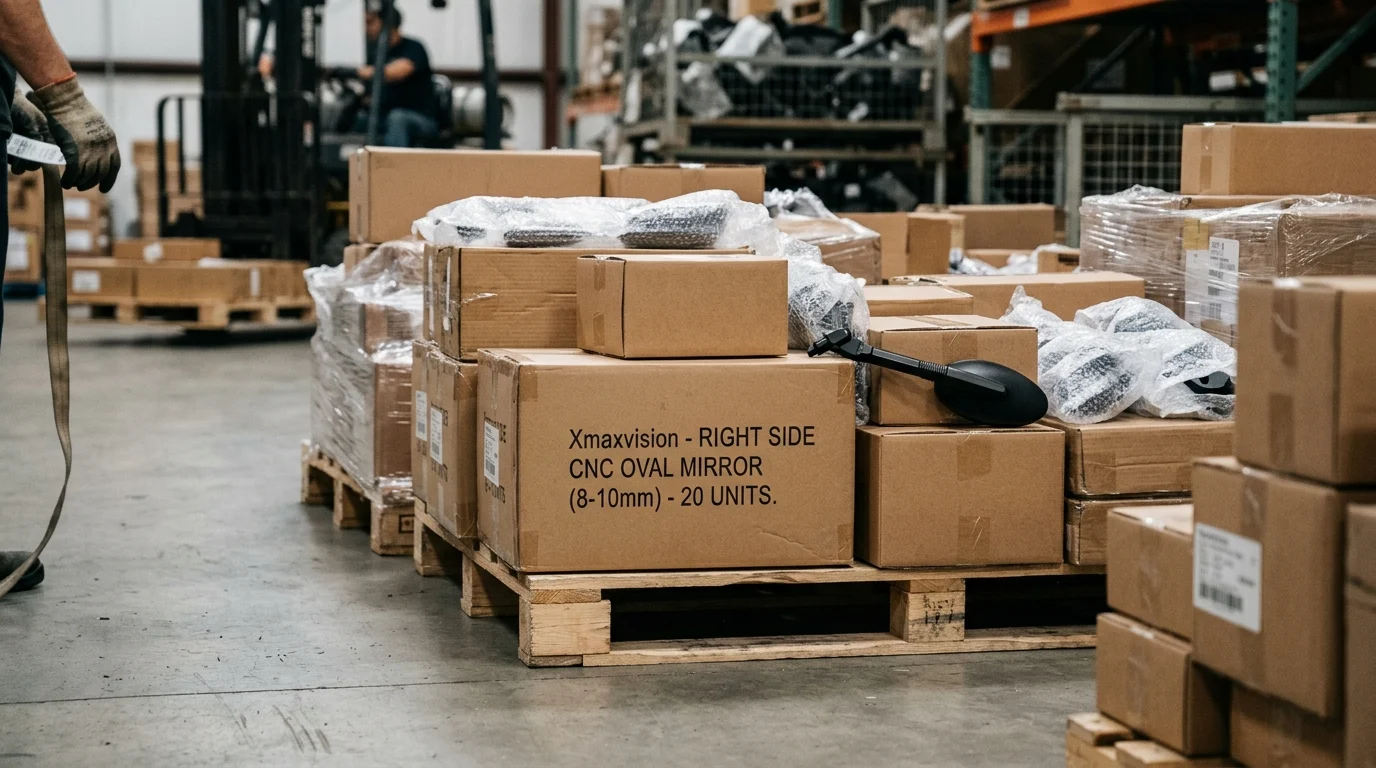
When searching for a solution to factory mirror limitations, the Xmaxvision right-side oval motorcycle mirror stands out. This precision-engineered mirror is designed specifically to tackle the common issues of flex and narrow sightlines.
By utilizing advanced manufacturing techniques and focusing on broad compatibility, this mirror acts as a dedicated tool for right-side blind spot management, either supplementing or replacing the factory unit to give a clearer view of overtaking traffic. To function as a true upgrade, the Xmaxvision unit features concrete specifications: a confirmed convex lens measuring approximately 4.5 by 2 inches, a solid weight of roughly 0.8 pounds, and a multi-axis ball-joint pivot for precise adjustability. These physical and optical traits provide a clearer image and improved situational awareness compared to flat factory glass, though riders should remember that convex shapes improve the field of view at the cost of accurate distance perception.
Oval Housing, CNC Build, and Right-Side Visibility
The standout feature of this mirror is its CNC-machined aluminum housing, which keeps the glass steady at highway speeds. Keep in mind that “aircraft-grade” is an industry marketing term for high-quality aluminum alloys, but it reliably indicates a durable, solid construction.
Additionally, the oval housing is not just an aesthetic choice. Compared to traditional round mirrors, the elongated design significantly expands the horizontal field of view—provided the mirror is mounted in a horizontal orientation. Mounted vertically, it would not deliver the same benefit. When oriented correctly on the right side, this wider angle is critical for monitoring overtaking traffic and managing merges safely. Proper installation and angle adjustment guarantee a clear rearward view, allowing you to see exactly what is happening in your right-side blind spot.
Why 8–10mm Handlebar Screw Compatibility Matters
Compatibility is a major hurdle when buying aftermarket parts, which is why the 8mm to 10mm fitment of the Xmaxvision mirror is important. Rather than utilizing a continuous adjustable span, the product ships with discrete 8mm and 10mm threaded adapters. This specific sizing covers a vast majority of modern street bikes, cruisers, and scooters on the market today, making it a drop-in replacement for many factory setups.
However, diameter alone is insufficient to guarantee fitment. You must also verify the thread pitch (e.g., 1.25 mm versus 1.5 mm) and check for reverse-thread requirements, particularly on right-side mounts for certain motorcycle brands. Understanding this compatibility ensures you will not be forced to buy flimsy aftermarket adapters that introduce new points of vibration. A direct, metal-to-metal connection provides the tightest possible fit. Keep in mind that handlebar screw compatibility does not cover all mounting configurations, such as fairing mounts, bar-end mounts, or clip-ons. Always verify your specific mounting type and thread specifications before purchase.
How to Install, Maintain, and Choose the Right Motorcycle Mirror
Choosing the
Key Takeaways
- Measure your motorcycle’s mirror mount first, because the Xmaxvision right-side mirror is intended for 8mm or 10mm screw diameters.
- Upgrade from lightweight plastic mirrors if your rear view blurs at highway speeds or high RPMs.
- Choose CNC aluminum construction when vibration resistance, durability, and corrosion protection matter more than minimum weight.
- Confirm local DOT, E-mark, SAE, or glass-size requirements before replacing an OEM mirror for road use.
- Decide between flat and convex glass based on whether you prioritize accurate distance judgment or a wider field of view.
Frequently Asked Questions
Will the Xmaxvision right-side CNC mirror fit my motorcycle?
It is designed for handlebar mounts with 8mm or 10mm screw diameters. Before ordering, measure your existing mirror thread size and confirm whether your bike uses standard or reverse threading.
Why upgrade from a stock plastic motorcycle mirror?
Budget stock mirrors often use lightweight plastic housings that vibrate at speed, creating a blurred rear view. A CNC aluminum mirror can improve rigidity, reduce resonance, and provide a steadier image.
Is a right-side mirror useful for highway riding?
Yes. A well-positioned right-side mirror improves awareness during lane changes, merges, and overtakes, especially where blind spots make it harder to judge fast-approaching traffic.
Does aircraft-grade aluminum make a mirror better?
Aircraft-grade aluminum generally offers better strength, corrosion resistance, and vibration control than basic plastic. However, it may add weight, so installation and mount condition should be checked carefully.
Should I choose flat or convex mirror glass?
Flat glass gives more accurate distance judgment, while convex glass widens the field of view but can make vehicles appear farther away. Choose based on your riding environment and visibility needs.
Post time: Aug-17-2026